
Most investors spend their time reacting to what prices already did. If the stock moves up, they think a rally is starting. If it goes down, they assume something is wrong.
This is a recipe for disaster.
More often than not, price movement is merely a reflection of sentiment. The investors who consistently find the best opportunities tend to focus elsewhere: on the events that cause these price movements before they happen.
Indeed, many important events carry implications that move through the market long before their full impact appears in the chart.
Understanding these stock signals gives investors an informational advantage, because the biggest stock moves rarely start with price alone. They start with new information that changes how the market thinks about a company’s future.

Therefore, the challenge for investors is catching these stock market signals early, interpreting them correctly, and monitoring them consistently across thousands of companies. The difference between reacting to price movements and tracking the events that cause them often determines whether you are trading noise or discovering real opportunities.
But what events are we exactly referring to? Below are seven market events that historically move stocks far more than daily price fluctuations.
1. Earnings Surprises
Quarterly earnings calls remain one of the most powerful signals in financial markets because they reveal whether reality matched expectations.
Before earnings announcements, analysts, investors, and institutions build forecasts around revenue growth, margins, and earnings per share. The stock price reflects the collective expectation of those forecasts. When the reported numbers deviate significantly from that consensus, the market adjusts quickly.
A company that reports earnings far above expectations often experiences immediate upward repricing. This occurs because investors must recalibrate their models. Higher profits suggest stronger demand, better execution, or improved efficiency, all of which increase future earnings estimates.
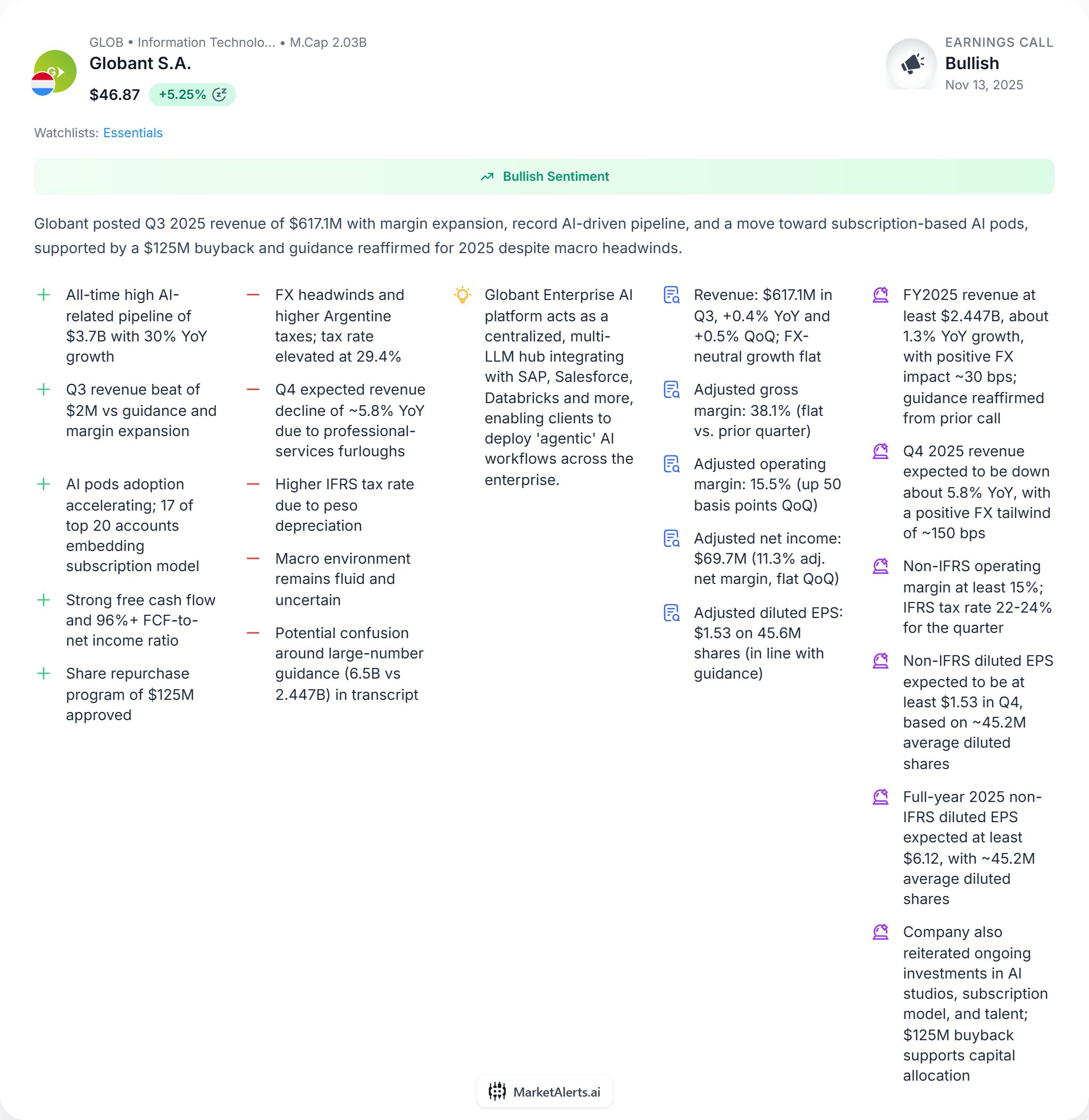
Negative surprises can have the opposite effect. A single earnings miss can trigger large drawdowns, not necessarily because the quarter itself was disastrous, but because it signals that previous assumptions about the company’s trajectory may have been too optimistic.
Academic research consistently shows that earnings surprises produce a phenomenon known as post-earnings announcement drift. Stocks that beat expectations often continue outperforming for months, while stocks that disappoint frequently continue lagging.
The market rarely digests new information instantly. Institutional investors adjust positions gradually, analysts revise models, and new buyers or sellers enter the market as the implications become clearer.
This is why investors who track earnings surprises understand why the price moved and whether the move might continue.
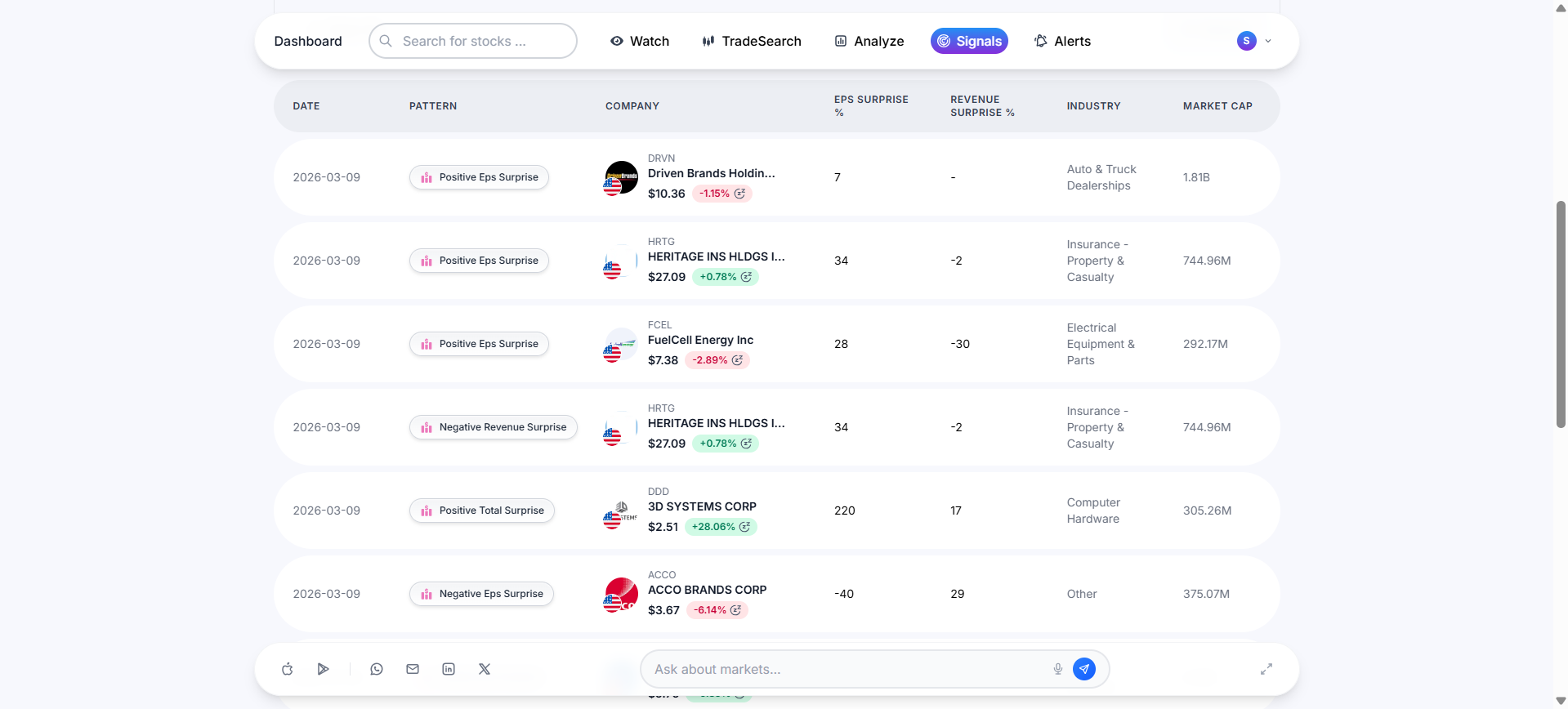
2. Guidance Changes
The market cares deeply about the future, which is why guidance revisions from management often move stocks even more than the earnings report itself.
During earnings calls and official filings, executives provide forward-looking guidance about revenue, margins, demand trends, or strategic priorities. These statements influence analysts’ expectations and, by extension, valuation models.
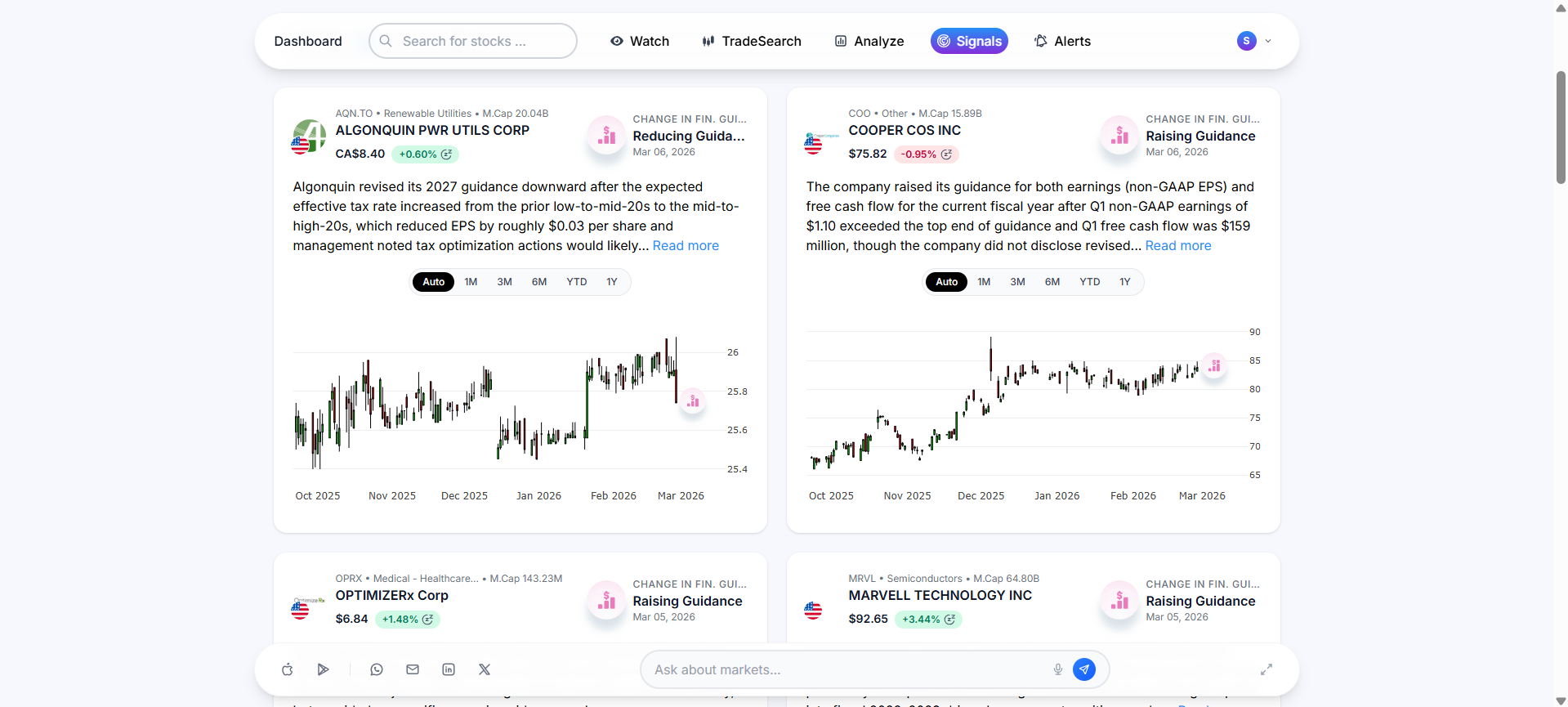
When management raises guidance, it signals confidence in upcoming performance. Investors interpret this as evidence of strong demand, successful product adoption, or operational momentum. Prices often adjust upward quickly because higher projected earnings justify higher valuations.
Lowered guidance sends a very different signal. Even if the most recent quarter looks healthy, a reduction in forward expectations suggests trouble ahead. The market tends to react sharply because investors price stocks based on future earnings rather than past performance.
The subtlety lies in how guidance changes. Sometimes companies do not explicitly raise or lower projections but instead shift the tone or emphasis of their commentary. Words like “moderating demand,” “near-term headwinds,” or “stronger pipeline” can influence expectations long before the numbers change.
Experienced investors read between the lines, comparing current guidance with previous quarters to detect subtle shifts in management’s outlook.
Create a free MarketAlerts account to automatically track stock market signals with AI and receive smart trading alerts the moment opportunities emerge.

3. Insider Transactions
Few signals attract as much attention as insider transactions in a company’s stock.
Corporate insiders have a deep understanding of their business. They know the company’s strategy, competitive position, and operational performance long before that information becomes fully visible to the public market. Because of that proximity to the company’s real condition, their stock transactions naturally draw attention from investors who are trying to interpret what may be happening beneath the surface.
However, not all insider activity carries the same weight. Executives sell shares for many reasons, including diversification, tax planning, or personal financial needs. These sales do not necessarily reflect a negative outlook on the company. Purchases, on the other hand, tend to attract more scrutiny because they represent a voluntary decision to commit personal capital based on the insider’s expectations for the company’s future.

Patterns within insider transactions can be particularly informative. Clusters of insider buying, where multiple executives acquire shares within a short period of time, often signal strong internal confidence that the stock may be undervalued. On the other hand, unusually heavy selling activity across several insiders can sometimes raise questions about future expectations, although context always matters.
Historically, companies experiencing meaningful insider buying activity have tended to outperform over the following months. This does not guarantee success in every case, but the relationship between insider behavior and subsequent stock performance has been documented repeatedly across different markets and time periods.
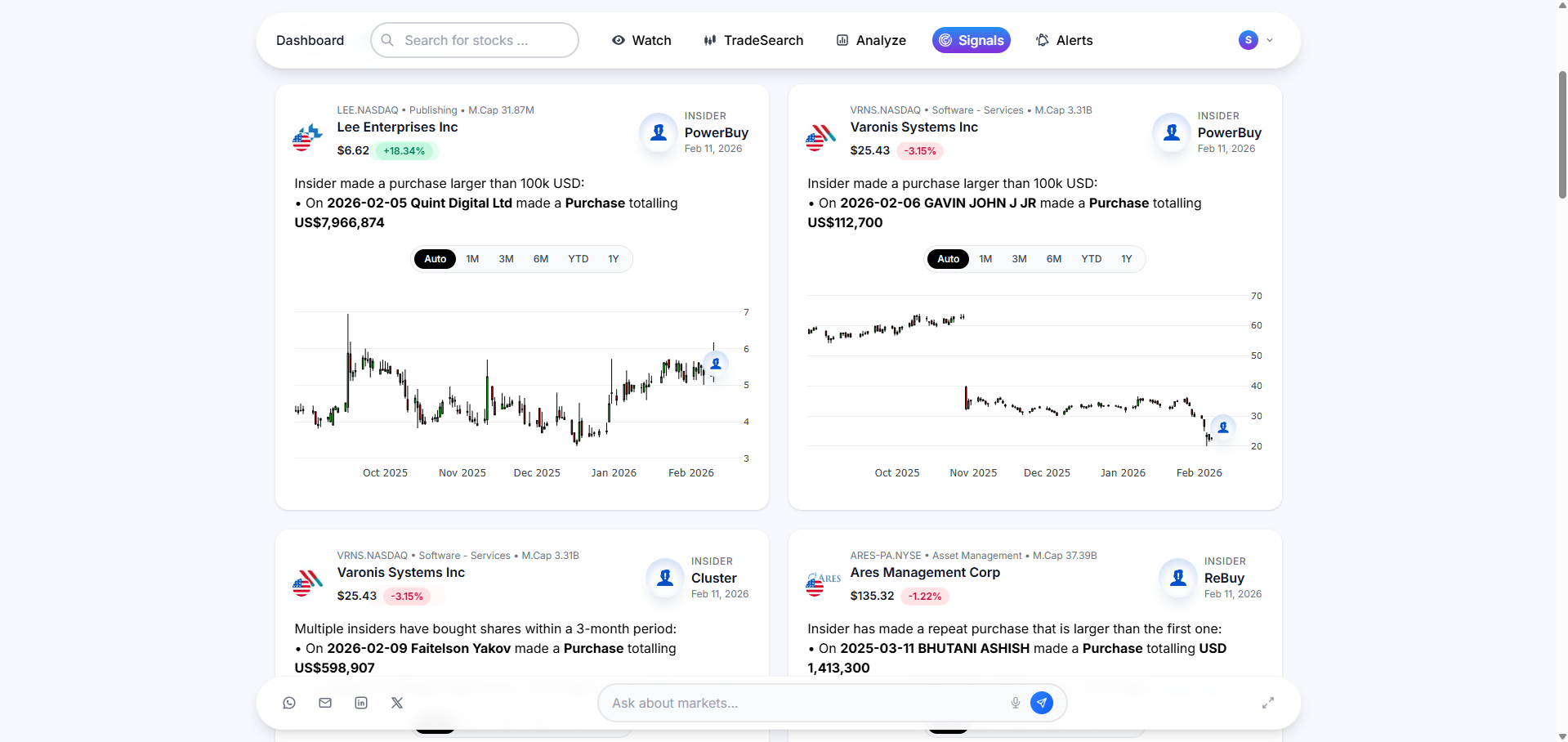
The challenge is visibility. Insider transactions are disclosed through regulatory filings, but manually tracking them across thousands of companies is nearly impossible for individual investors. Without systematic monitoring, many investors only become aware of these signals long after the opportunity has already passed.
Fortunately, you can solve this visibility problem with the right tools. MarketAlerts allows you to track insider transactions in one centralized place. You can monitor patterns as they develop, filter for the signals that matter most to your strategy, and set customized alerts based on companies, executives, transaction size, or clusters of activity.
When meaningful insider behavior occurs, you receive real-time notifications, giving you the opportunity to investigate and act while the information is still fresh and potentially impactful.

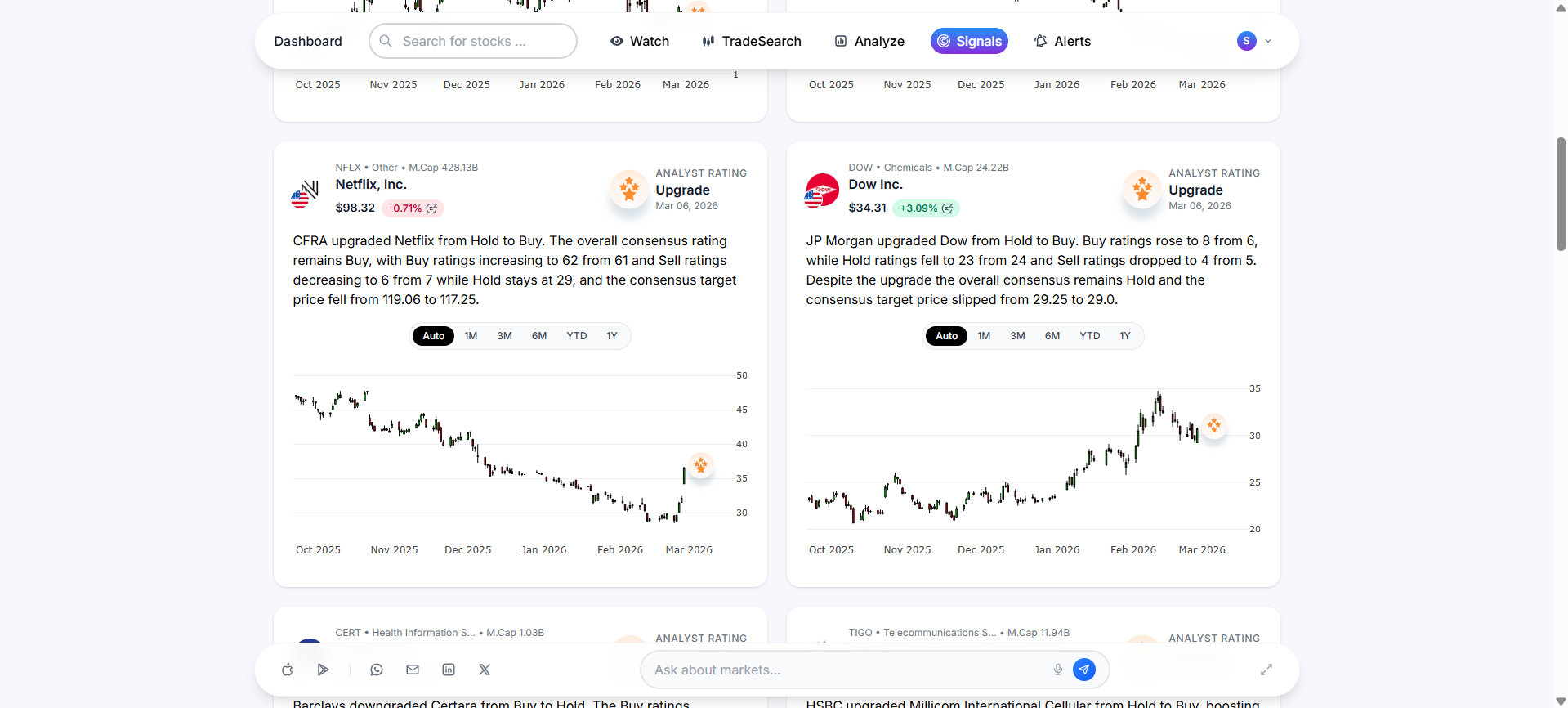
4. Analyst Upgrades and Downgrades
Equity analysts may not control markets, but their opinions shape institutional capital flows more than many investors realize.
Large asset managers, pension funds, and hedge funds rely on analyst research to inform portfolio decisions. When a major investment bank upgrades a stock, raises its price target, or shifts its rating from neutral to buy, that recommendation can influence billions of dollars in potential capital allocation.
The impact is strongest when the analyst provides new information or a compelling narrative shift. A well-argued upgrade supported by industry data, channel checks, or improved forecasts can cause investors to reevaluate a company’s long-term prospects.

Downgrades can trigger equally strong reactions, especially when they reveal deteriorating fundamentals or risks that were previously overlooked.
Some investors dismiss analyst opinions as lagging indicators. Yet when multiple firms revise ratings or price targets simultaneously, the collective shift in sentiment can drive substantial market moves.
Tracking these changes across the market provides insight into how professional analysts are adjusting their outlook on companies and sectors.
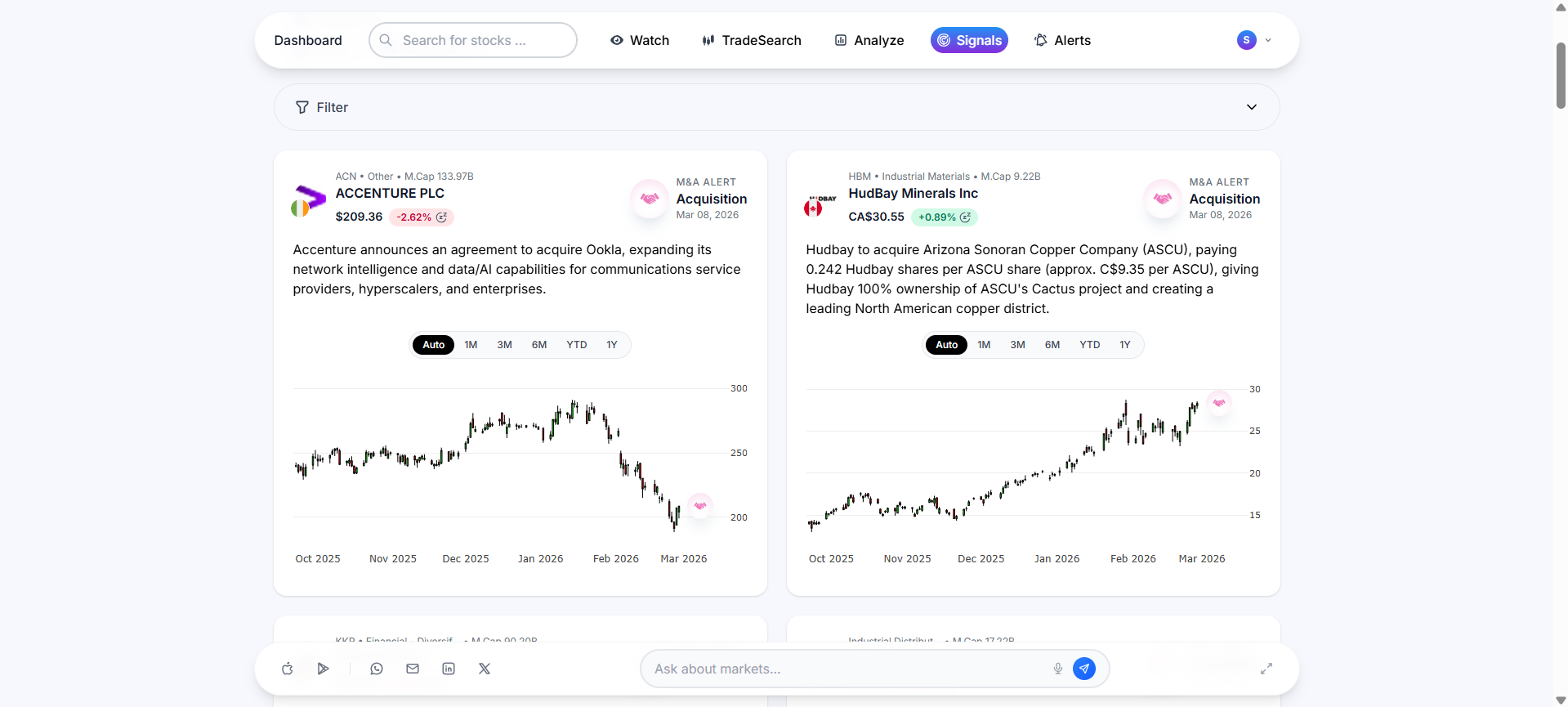
5. Mergers and Acquisitions
Merger and acquisition announcements are among the corporate events most capable of moving a stock price overnight.
When a company announces it will acquire another business, investors immediately evaluate the strategic implications. Will the deal expand market share, create cost synergies, or open new revenue streams? Or will it dilute shareholders and introduce integration risks?
For the target company, acquisition offers typically trigger large price spikes as the market adjusts to the takeover premium. For the acquiring company, reactions vary depending on whether investors believe the deal creates or destroys value.

Beyond individual transactions, M&A activity can reshape entire industries. Consolidation waves often signal changing competitive dynamics, regulatory shifts, or technological disruption.
For investors watching closely, acquisition rumors and announcements frequently highlight emerging strategic trends within sectors. Companies rarely pursue large deals without believing those moves will strengthen their position in the future market landscape.
In other words, each deal is a signal about where management believes the industry is heading, which competitors are gaining power, and which companies may become the next acquisition targets. Investors who monitor these developments closely often gain an early view into shifts that the broader market only recognizes later.
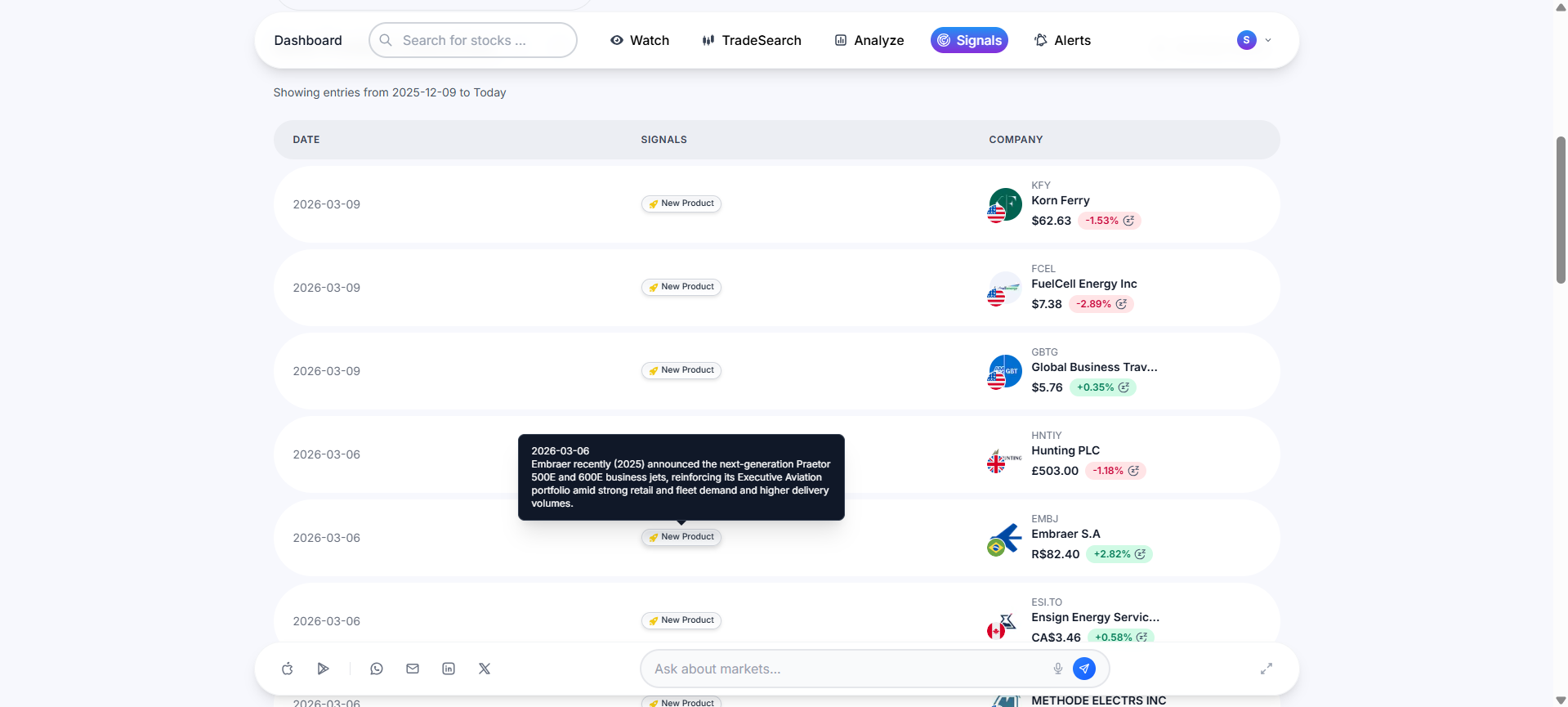
6. Major Product Launches
Innovation remains one of the most powerful drivers of long-term corporate growth.
When a company introduces a major new product or platform, investors immediately begin reassessing its potential impact on future revenue and profitability. A successful launch can expand a company’s addressable market, strengthen its competitive position, or create entirely new growth engines.
In some cases, a single well-timed product can transform the trajectory of a business. That was the case with Monster Beverage, which became one of the most remarkable long-term investments in stock market history after the launch of a simple but distinctive product that capitalized on a rapidly emerging energy drink category.

Technology companies provide many other well-known examples. A breakthrough product can create multi-year growth cycles as adoption accelerates and complementary services emerge.
However, the market reaction rarely depends on the announcement alone. Investors assess several factors simultaneously. Is the product meaningfully differentiated? Does it address a large and growing market? Can the company execute at scale?
Sometimes the most important signal appears months before the product reaches consumers. Supply chain activity, regulatory filings, hiring trends, and strategic partnerships often hint at upcoming launches.
Investors who track these developments early gain insight into where innovation and demand are heading, allowing them to position themselves before the market fully prices in the opportunity.
7. Regulatory Filings and Approvals
Regulation shapes entire industries, which means regulatory events can dramatically influence stock prices.
Companies must regularly file disclosures with regulators, including financial statements, insider transaction reports, and strategic updates. Some filings contain routine information, but others reveal developments that materially affect a company’s prospects.

In sectors such as biotechnology, pharmaceuticals, and financial services, regulatory approvals or rejections can instantly change a company’s valuation. A successful drug approval, for example, can unlock billions in potential revenue. A rejection can erase years of investment.
Even outside heavily regulated industries, filings often contain clues about future strategy. New share offerings, debt issuance, restructuring plans, or risk disclosures provide insight into management’s priorities and financial health.
Because these filings appear across multiple regulatory databases and agencies, many investors overlook them until the market has already reacted.

Why Investors Struggle to Track These Events
Understanding that these events matter is one thing. Monitoring them across the entire market is another challenge entirely.
There are thousands of publicly traded companies across global exchanges. Each one generates a constant stream of earnings releases, analyst updates, regulatory filings, insider transactions, and strategic announcements. Most investors simply do not have the time nor the resources to scan every document, press release, and transcript.
As a result, many people default to watching price charts because they appear easier to interpret. Price becomes the proxy for information. The problem is that price movements rarely explain themselves. By the time a chart clearly reflects a trend, the underlying catalyst may already be widely known and the opportunity, gone forever.
Professional investors approach the market differently. They focus on information flow rather than price movement. Instead of asking why a stock moved, they monitor the events capable of causing the move in the first place.

Discover a Better Way to Watch the Market
Most investors spend years trying to decode price charts, convinced the next pattern or indicator will reveal a hidden edge.
Yet markets rarely reward those who focus only on the surface.
The deeper signals usually appear in the events that change a company’s trajectory:
Surprise earnings reports that resets growth expectations.
Sudden clusters of insider purchases that signal confidence from management.
Mergers and acquisitions that reshape competitive dynamics.
Regulatory approvals that unlock an entirely new market.
These moments happen every day across global markets. Each one quietly reshapes expectations. And when expectations change, prices follow.
The problem is that most investors never see these signals in time. They appear first in filings, reports, and announcements long before they become obvious in the chart. By the time the price trend is clear, the information that caused it may already be widely known.

When you begin watching the market through this lens, daily price fluctuations start to feel far less important. What matters instead are the catalysts that redefine how investors value a company.
At that point, investing becomes less about reacting to volatility and more about understanding the flow of information that drives it.
Thousands of companies generate new data every hour, tracking these signals manually is almost impossible. This is where tools designed to monitor markets in real time become incredibly powerful.
With MarketAlerts, you can automatically track the events that move stocks. The platform continuously scans global markets for earnings surprises, insider transactions, analyst rating changes, technical signals, and other structural developments. Instead of searching through endless news releases and filings, you receive smart alerts the moment something meaningful happens.
If you want to stop reacting to price and start tracking the signals that actually drive it, create your free account and set up your first smart trading alerts today. You may be surprised how many opportunities appear once you begin watching the market through the events that truly move it.