

The stock market regularly produces a strange outcome: strong, profitable businesses sometimes trade at prices that imply their future is far weaker than their actual performance suggests.
You might encounter a company that continues to grow revenue, expand its customer base, and generate steady profits, yet its stock price drifts steadily downward for months. Over time, the market narrative becomes increasingly pessimistic, even while the underlying business continues operating with remarkable consistency.
This disconnect between a company’s market price and its underlying economic value sits at the center of value investing.
Financial markets react quickly to information, expectations, and emotion. A single earnings disappointment, a shift in macroeconomic sentiment, or a change in investor attention can trigger sharp price movements. The underlying business, however, evolves at a far slower pace. Factories continue producing goods, customers continue buying products, and competitive advantages built over years rarely disappear overnight.
As a result, the market price of a company can temporarily move far away from the long-term value the business is capable of producing.
Value investors devote their attention to these moments. They try to estimate what a business is truly worth based on its fundamentals, its competitive position, and its long-term ability to generate cash. When the market price falls well below that estimate, the gap creates an opportunity.

Purchasing a company at a significant discount to its intrinsic value allows investors to benefit when the market eventually adjusts its expectations and the price begins reflecting the underlying economics of the business.
The principle is easy to understand. The real challenge lies in identifying genuine mispricing. Many stocks trade at low valuations because their businesses are deteriorating, their industries are changing, or their competitive advantages are fading. Distinguishing temporary pessimism from legitimate long-term decline requires careful analysis, patience, and independent judgment.
Value investing exists within that narrow space where perception diverges from reality.
What Is Value Investing? Key Concepts and Definitions
Value investing rests on a single belief: the market price of a company and the true value of that company are not always the same.
The price you see on a stock chart reflects what buyers and sellers agreed on at a specific moment. It captures sentiment, expectations, fear, excitement, liquidity conditions, and sometimes simple misunderstanding. Price is the outcome of a negotiation between millions of market participants, each reacting to incomplete information.
Intrinsic value attempts to answer a different question. Instead of asking what investors are currently willing to pay, it asks what the business is actually worth based on its ability to generate profits and cash over time.

When you buy a stock as a value investor, you are not simply purchasing a ticker symbol or speculating on a short-term move. You are acquiring a small ownership stake in a real business. That business has assets, liabilities, revenues, customers, competitive advantages, and future growth potential. All of these factors contribute to its economic value.
If a company consistently generates strong cash flow and operates with a durable business model, its intrinsic value is likely far higher than the market might occasionally suggest.
Value investing is the practice of identifying those moments when the market price falls meaningfully below that underlying value.
What Intrinsic Value Really Means in Investing
Intrinsic value is often misunderstood as a precise number that can be calculated with mathematical certainty. In reality, it is an estimate based on the economic characteristics of a business.
Value investors analyze a company’s financial statements, competitive position, industry dynamics, and long-term prospects to estimate how much cash the business can produce in the future. That stream of future cash flows represents the economic engine that ultimately determines what the company is worth.
Several factors play an important role in this evaluation:
The durability of the company’s revenue model.
The consistency of earnings growth.
The strength of its competitive advantages.
The quality of management.
The company’s balance sheet and debt obligations.

If a business can reliably generate cash for decades, its intrinsic value will likely be substantial. If its profits are unstable or heavily dependent on uncertain future developments, its value becomes harder to estimate and risk increases.
The important insight for value investors is that intrinsic value tends to evolve gradually. Businesses rarely transform overnight. Markets, on the other hand, can swing dramatically within days or even hours.
That difference in pace is what creates opportunity.
Why Markets Misprice Companies
If financial markets were perfectly rational and investors always processed information objectively, value investing would not exist. Prices would instantly reflect the full economic value of every company.
Real markets behave very differently because they are shaped by human behavior.
Fear and uncertainty can drive investors to abandon even strong companies during economic downturns. Negative headlines may trigger broad selling across an entire industry, even when the underlying fundamentals of individual businesses remain intact. Short-term earnings disappointments can cause sharp price declines despite healthy long-term growth prospects.
At the same time, optimism and excitement can push certain stocks far above their realistic economic value. Investors often chase recent performance or popular narratives, creating periods where attention concentrates on a small set of companies while others are largely ignored.
Value opportunities often appear during these moments of imbalance.

A company might report one disappointing quarter and see its stock drop sharply despite maintaining strong long-term fundamentals. An industry facing temporary regulatory uncertainty might experience widespread selling that pushes many stocks below fair value. Market volatility can also create forced selling from institutional investors who need liquidity, regardless of the underlying business quality.
For patient investors who focus on fundamentals rather than headlines, these situations can provide opportunities to buy strong companies at attractive prices. However, recognizing them requires more than reacting to price movements or headlines.
Investors who practice value investing step back and evaluate the broader context surrounding a company, paying attention to signals that reveal how the underlying business is evolving.
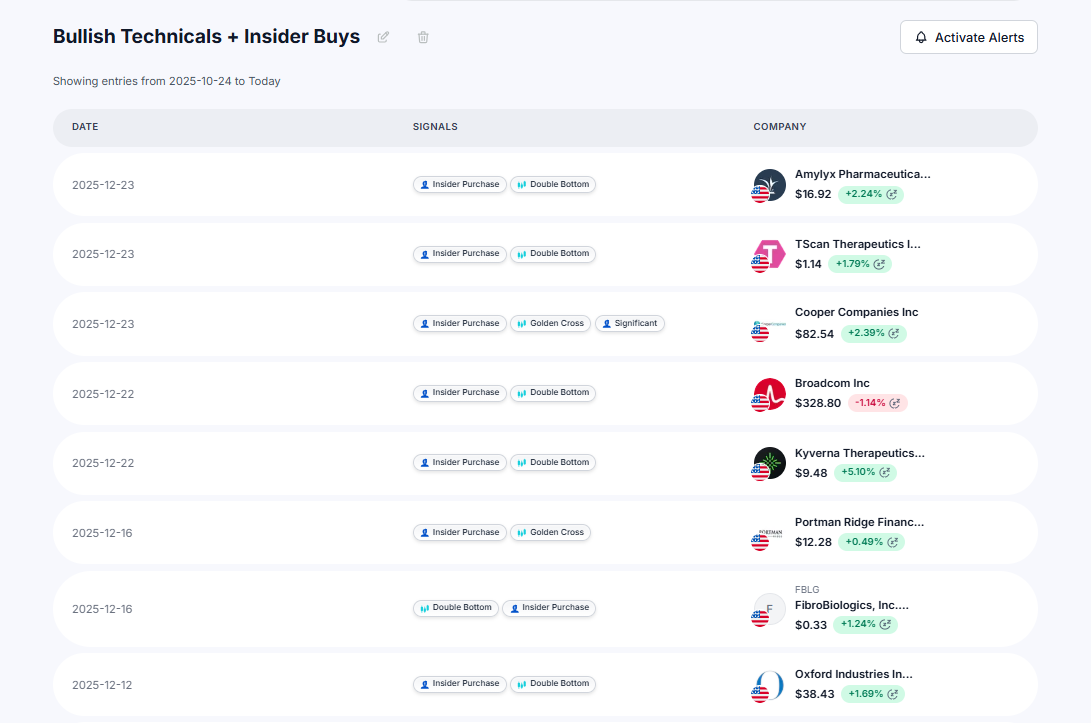
MarketAlerts helps investors track these high-quality stock signals across the market and connect them with the broader fundamental picture. You can monitor these developments in real time and better identify moments when market sentiment has pushed prices away from underlying business value, creating opportunities to act with greater clarity and confidence.
The Margin of Safety: The Principle That Protects Value Investors
Even the most careful analysis cannot produce a perfect estimate of intrinsic value. Businesses operate in dynamic environments where competition, economic conditions, and technological change constantly reshape the landscape.
Because of this uncertainty, value investors rely on one of the most important principles in investing: the margin of safety.

A margin of safety means purchasing a stock at a price significantly below your estimate of its intrinsic value. The larger the gap between price and value, the greater the protection against unexpected developments or analytical errors.
Imagine you estimate that a company is worth $100 per share based on its earnings power and growth potential. If the stock trades at $95, the opportunity is limited because even a small miscalculation could erase the potential upside. But if the same company trades at $60, the situation becomes far more compelling. Even if your intrinsic value estimate turns out to be somewhat optimistic, the large discount provides a cushion against mistakes.
The margin of safety transforms value investing from speculation into a probability game.
Key Metrics Value Investors Analyze for Maximum Results
Estimating intrinsic value requires examining a company’s financial health and economic performance. While no single metric can capture the full picture, several indicators provide valuable insight into whether a stock might be undervalued.
Price-to-Earnings Ratio (P/E)
The price-to-earnings ratio compares a company’s stock price to its earnings per share. It measures how much investors are willing to pay for each dollar of profit.
A relatively low P/E ratio may indicate that the market has modest expectations for future growth or that investors are currently pessimistic about the company’s prospects. In some cases, that pessimism may be justified. In other situations, it can signal an opportunity where the market has become overly negative.
Value investors rarely evaluate the P/E ratio in isolation. Instead, they compare it with industry peers, historical averages, and expected earnings growth to determine whether the valuation appears reasonable.

Price-to-Book Ratio (P/B)
The price-to-book ratio compares the market value of a company to the accounting value of its net assets.
For asset-heavy businesses such as financial institutions, manufacturers, or real estate companies, this ratio can reveal situations where the market values the company below the worth of the assets it owns. In some cases, investors may effectively be buying the underlying assets at a discount.
A low P/B ratio can sometimes indicate structural problems within the business, which is why deeper analysis is essential. When the underlying operations remain healthy, however, this metric can highlight compelling value opportunities.
Free Cash Flow
Earnings figures are influenced by accounting conventions, depreciation schedules, and other adjustments that may obscure the real economic performance of a business.
Free cash flow focuses on the cash a company generates after covering operating expenses and capital investments required to maintain the business. This cash represents the resources that can be used to repay debt, reinvest in growth, repurchase shares, or return capital to shareholders.
Companies with strong and consistent free cash flow often possess durable business models and operational efficiency. When such companies trade at modest valuations, value investors pay close attention.

Debt Levels
A company’s balance sheet plays a crucial role in determining financial resilience. Excessive debt can magnify risk, particularly during economic downturns when revenues decline and borrowing conditions tighten.
Value investors evaluate debt ratios, interest coverage, and the maturity structure of liabilities to determine whether the company can comfortably meet its obligations. Strong balance sheets provide stability and flexibility, increasing the likelihood that a company can navigate difficult economic environments.
Earnings Stability
Consistency matters. Businesses that produce stable earnings across multiple economic cycles are easier to value and often deserve greater investor confidence.
Large swings in profitability can make intrinsic value estimates unreliable and increase the risk that apparent bargains are actually value traps.
This is why analyzing long-term earnings patterns is critical for investors to identify companies whose profitability reflects durable competitive advantages rather than temporary conditions.
Why Value Opportunities Continue to Exist
Many investors assume that modern technology and the vast availability of financial data have eliminated market inefficiencies. With millions of analysts, algorithms, and institutional investors scanning markets constantly, it may seem unlikely that obvious bargains could remain undiscovered.
In reality, value opportunities continue to emerge because the challenge goes beyond accessing information. The real challenge lies in interpreting that information objectively while resisting the emotional pressures that dominate markets.

Short-term performance expectations create incentives for many professional investors to prioritize immediate results over long-term value. Quarterly benchmarks, fund flows, and media narratives encourage rapid reactions to news and price movements.
This environment often amplifies short-term volatility. Companies may be punished harshly for temporary setbacks or overlooked because they do not currently fit dominant market narratives.
The Real Challenge: Finding Value Across Thousands of Stocks
While the philosophy of value investing is conceptually simple, the practical implementation becomes far more demanding.
Global stock markets contain thousands of publicly traded companies. Each produces financial reports, earnings announcements, regulatory filings, management commentary, analyst revisions, and insider transactions. Within that constant stream of information, potential value opportunities appear gradually as new data reshapes the market’s perception of a business.
Tracking all of these developments manually is nearly impossible.
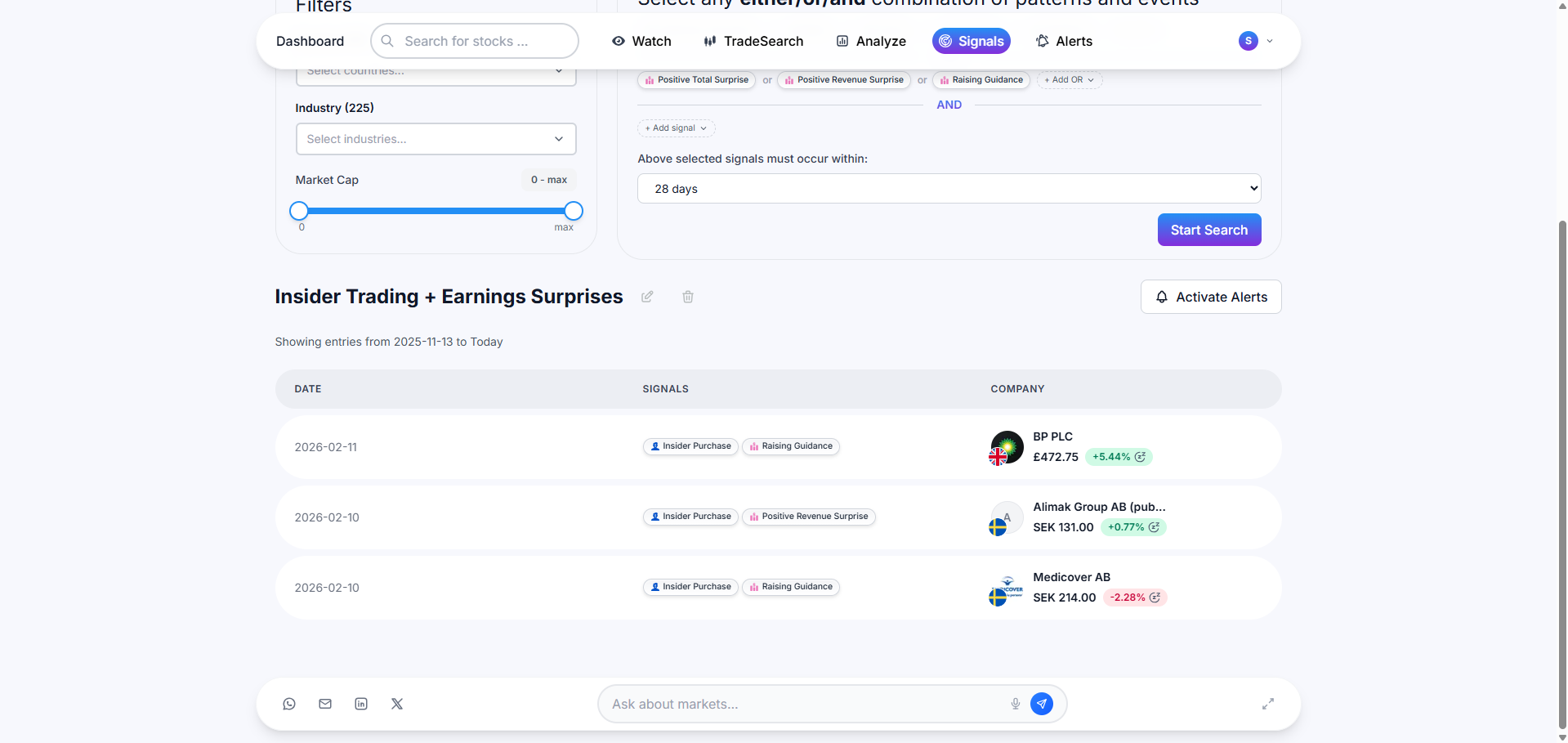
A company might report stronger-than-expected earnings after several weak quarters. An executive team might begin purchasing shares of their own company in the open market. Analysts might quietly revise their forecasts upward after new product launches or improving demand conditions.
Individually, these events may appear subtle. Together, they can signal a shift in fundamentals that begins to close the gap between price and intrinsic value.
Recognizing those turning points early requires continuous monitoring across a wide universe of stocks. This is where MarketAlerts makes a real difference for value investors.
Combining Traditional Value Investing Analysis With Modern Market Monitoring
The most effective investors increasingly combine the timeless principles of value investing with tools that help them detect meaningful signals across the market as they appear.
Instead of manually screening thousands of companies each day, investors can focus their attention on developments that reveal when the market’s perception of a business may be starting to change. Events such as earnings surprises, insider buying, analyst revisions, and unusual trading activity often provide early clues that expectations are shifting.
MarketAlerts was built around this exact idea.
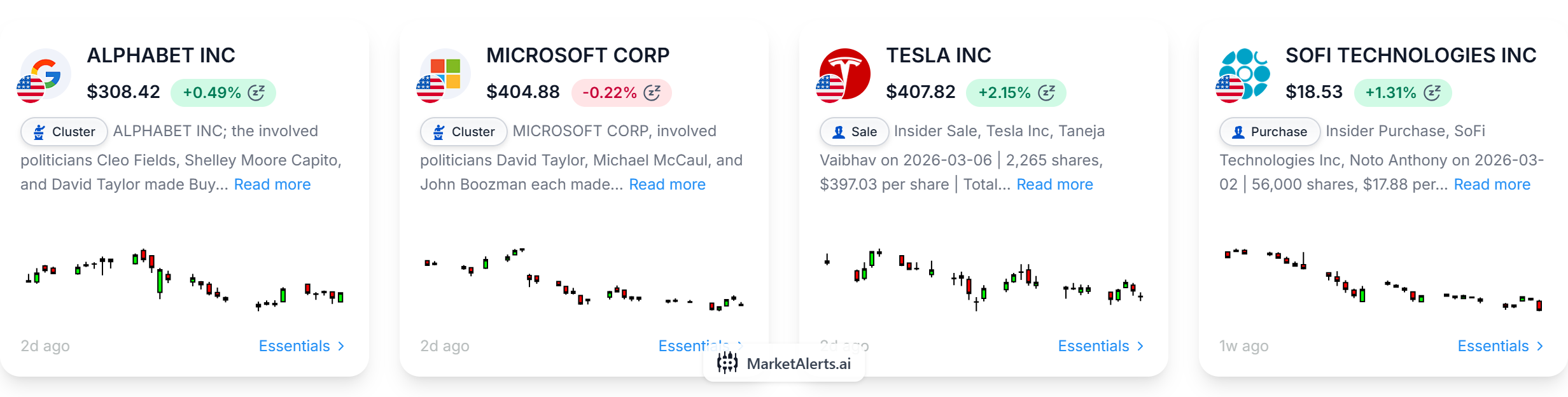
The platform continuously scans thousands of stocks and identifies significant technical, fundamental, and corporate developments as they occur. Earnings announcements, insider transactions, analyst upgrades or downgrades, chart patterns, and other market-moving events are automatically detected and surfaced in real time. Rather than trying to monitor countless filings, reports, and news releases manually, you can see when important signals begin appearing around specific companies.
Consider a stock trading at a relatively low valuation after a period of weak sentiment. If that company begins reporting stronger-than-expected earnings, attracting insider purchases from executives, or receiving upward analyst revisions, those signals can indicate that the business may be improving faster than the market currently believes.
Identifying these developments early gives investors valuable time to analyze the fundamentals and determine whether the gap between price and intrinsic value still exists.
MarketAlerts helps investors track these kinds of shifts across the entire market simultaneously. Custom stock watchlists, real-time trading alerts, smart screening tools, and AI-powered trade search make it possible to monitor large numbers of companies without losing sight of the signals that matter most.
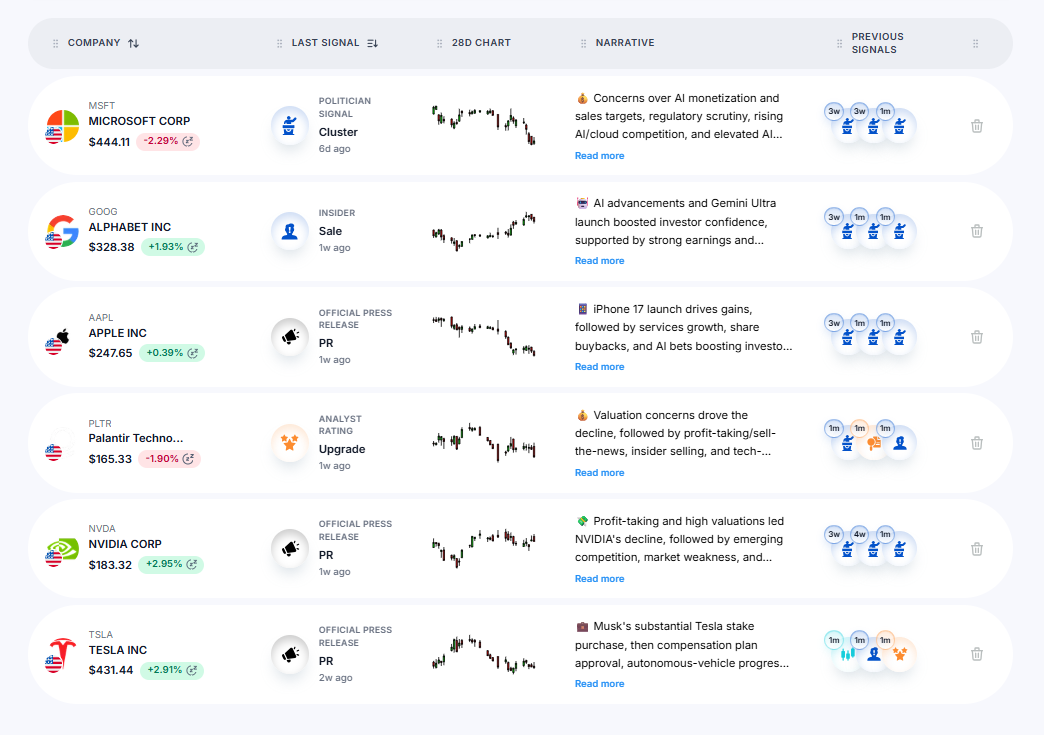
For value investors, this approach adds a powerful layer to traditional fundamental analysis. You can focus your research on situations where new information suggests the market narrative may already be starting to change.
Value Investing: A Timeless Strategy in an Information-Driven Market
Value investing has endured for decades because it reflects a fundamental truth about financial markets: prices fluctuate far more rapidly than business value.
Investors who learn to distinguish between the two gain a powerful advantage. They develop the ability to recognize when the market has become overly pessimistic about strong companies and when patience can transform temporary mispricing into long-term opportunity.
Modern markets produce more information than ever before, which makes the search for undervalued stocks both richer and more complex. The investors who succeed are those who combine rigorous fundamental analysis with tools that help them monitor the constant flow of market signals.

Applying the principles of value investing and using platforms like MarketAlerts to track meaningful corporate developments across the market are critical for investors to uncover opportunities where price and value have temporarily diverged.
Those moments, when the market has not yet caught up with reality, remain some of the most compelling opportunities available to long-term investors.