
In investing, having the right information before everyone else can make a huge difference. Insider transactions offer exactly that: they show how people with the most knowledge of a company feel about its future.
Reading insider trading activity correctly can give you a massive investment advantage. Patterns of buying or selling, the timing of trades, and the scale of transactions all reveal clues about a company’s prospects.
This article will show you how to interpret insider transactions, turn them into actionable stock signals, and use tools like real-time trading alerts to make smarter investment decisions.

What Is Insider Trading?
Insider trading occurs when individuals with access to non-public, material information about a company buy or sell its stock. Material information refers to anything that could significantly impact the stock’s price, such as earnings surprises, mergers, or regulatory decisions.
Insiders are typically executives, directors, or employees who have access to sensitive company data.
Understanding the distinction between legal and illegal insider trading is critical for investors interpreting insider activity. Legal insider trading occurs when company executives, directors, or insiders buy or sell shares and properly disclose those transactions to regulators such as the Securities and Exchange Commission. These filings make insider activity transparent and allow investors to analyze it as part of their decision-making process.
Illegal insider trading, by contrast, involves trading based on material, non-public information without proper disclosure. This creates an unfair advantage and undermines market integrity, which is why regulators impose severe penalties, including fines and potential imprisonment.

What Insider Transactions Mean and Why They Matter for Investors
Insider transactions can act as stock signals, offering a valuable window into how those closest to a company view its prospects, but only when interpreted with the right context.
When insiders buy shares with their own capital, it often reflects conviction. Executives and directors already have significant exposure to their company, so additional purchases suggest they believe the stock is undervalued or that future performance will improve. Clusters of buying or unusually large transactions tend to carry more weight than isolated trades.
Insider selling is more nuanced. Sales can signal concern, but they are just as often driven by diversification, liquidity needs, or compensation structures. Many executives sell shares through pre-arranged trading plans, which reduces the informational value of those transactions. Without context, selling activity can be misleading.
What makes insider data useful is its consistency and scale. Persistent buying across multiple insiders has historically been associated with stronger future returns, while abrupt or outsized selling can coincide with increased uncertainty or volatility.
Insider activity can also act as a contrarian signal when patterns change. A transition from sustained buying to sudden, concentrated selling may indicate a shift in internal expectations or rising uncertainty.
In any case, the real signal is not in a single transaction, but in the pattern.
MarketAlerts has an integrated insider trading tracker that allows you to monitor the market for recent insider transactions. You can also configure smart trading alerts so you learn about new movements as soon as they happen.
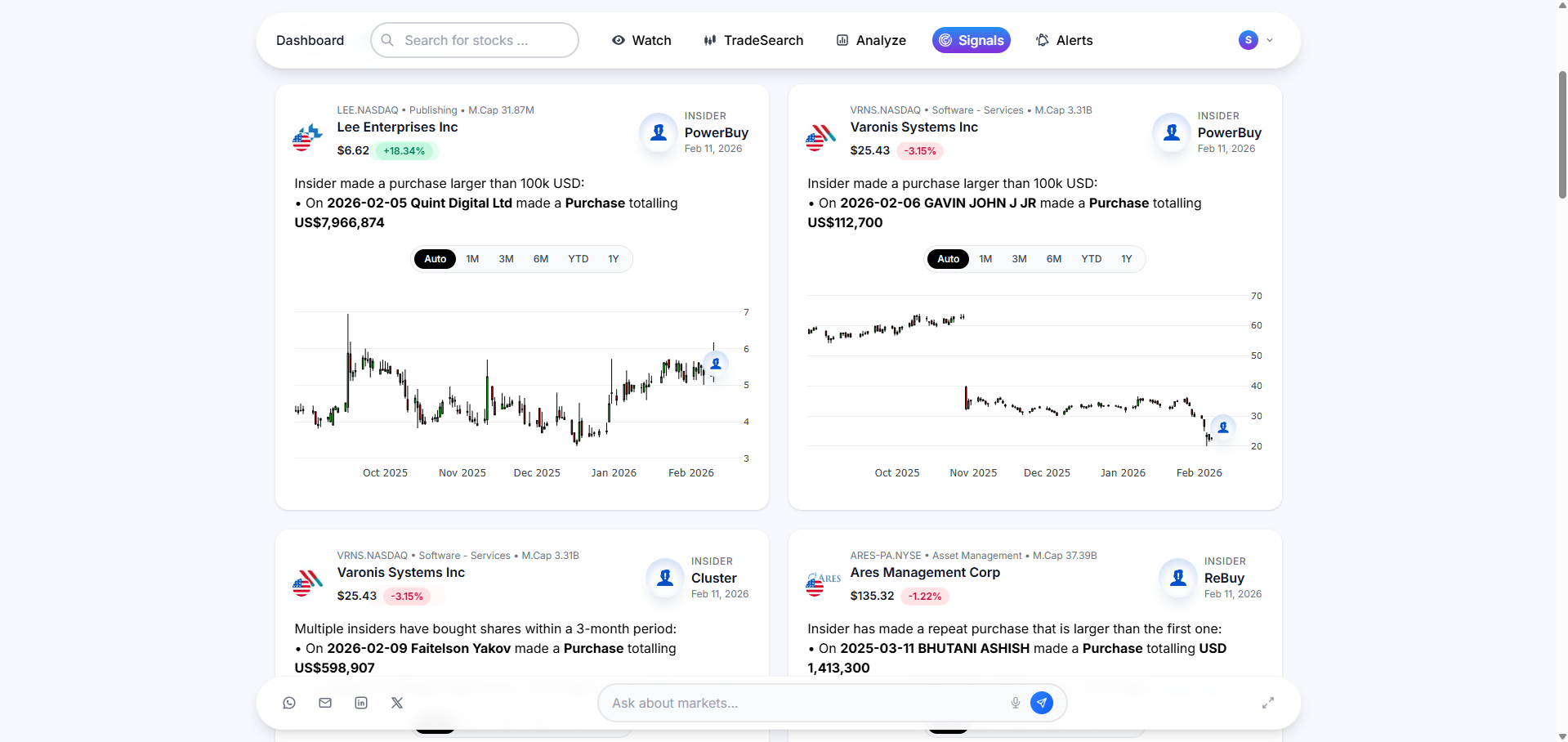
Congressional Insider Trading: When Politicians Join the Game
Insider trading extends beyond corporate executives. Members of Congress and other political figures can have privileged access to market-moving information through briefings, legislation, or budget decisions. This practice, often referred to as congressional insider trading, has garnered attention in recent years.
Cases like Nancy Pelosi’s illustrate how political insiders may buy or sell stocks based on information not yet reflected in the market. While lawmakers are legally restricted from trading on non-public information, enforcement has historically been limited, raising ethical concerns.
For investors, congressional insider trading offers another layer of insight. Tracking politician’s insider transactions can sometimes reveal shifts in sectors poised to benefit or be impacted by upcoming legislation, regulatory changes, or government spending.
You can use MarketAlerts’ AI tracker to monitor politician stock signals and receive smart trading alerts every time they make a relevant transaction.
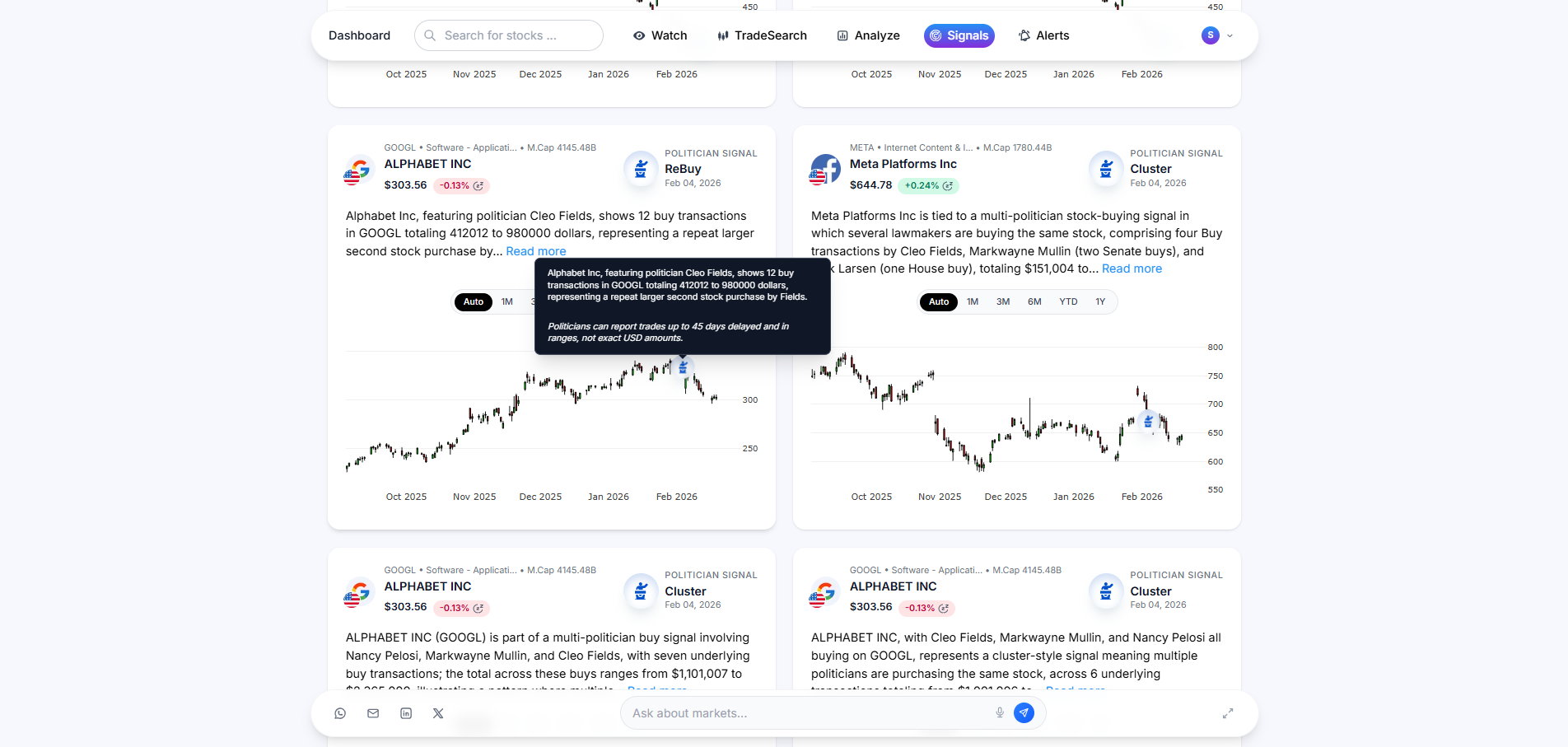
Using Insider Trading Transactions as Stock Signals
Insider transactions function as real-time stock signals, offering a direct view into how informed participants assess a company’s outlook. Unlike price action or lagging financial reports, these trades reflect decisions made by individuals with deep operational insight.
That proximity to the business is what makes insider activity a valuable sentiment indicator when analyzed correctly.
Many investors monitor insider transactions to spot early signals before they appear in broader market trends. The real advantage, however, comes from identifying shifts in behavior, such as coordinated buying, increasing position sizes, or changes in activity across multiple executives, rather than focusing on isolated trades. This is what makes insider activity more complex and far more valuable than it initially appears.
That is why MarketAlerts aims to simplify how investors turn insider activity into actionable insight. Our smart trading alerts focus on high-signal events, such as large discretionary purchases or concentrated buying across multiple insiders, and deliver them in real time. These stock signals can then be combined with technical setups, earnings data, and broader sentiment to form a clearer, more reliable investment view.

How MarketAlerts Works: Using AI to Transform Insider Trading Into Actionable Trading Insights
Monitoring insider trading manually can be time-consuming and complex. SEC filings are frequent, scattered across multiple companies and sectors, and often require interpretation to distinguish routine trades from meaningful activity.
This is where MarketAlerts provides a clear advantage.
Our AI can automatically scan thousands of filings in real time, detect significant insider transactions, and filter them based on criteria like role, transaction size, or timing. Instead of reacting to price moves after the fact, investors can receive instant insider trading alerts that highlight potentially market-moving activity.
For example, if a cluster of recent insider transactions shows several executives purchasing stock just ahead of an earnings announcement, AI can flag this as a signal. Investors can then analyze it alongside technical patterns, news, and sector trends to make informed decisions quickly.
MarketAlerts: Your Insider Trading Tracker
MarketAlerts functions as an advanced insider trading tracker, offering automated monitoring and real-time notifications for insider activity across all sectors. The platform combines AI-powered filtering with contextual analysis, allowing investors to differentiate between routine filings and transactions that may signal meaningful insights.
Users can set custom trading alerts for specific insiders, roles, companies, or transaction sizes. This ensures that only the most recent and relevant insider trading alerts are delivered, reducing noise and focusing on actionable intelligence.
For investors looking to integrate insider trading into a broader strategy, MarketAlerts also contextualizes activity with other signals, including technical chart patterns, fundamental events, and market sentiment.
Create your MarketAlerts account now and start tracking insider transactions.

Turning Insider Trading Insights Into Investment Strategy: Actionable Tips
In practice, insider trading transactions should never be viewed in isolation. They are most powerful when integrated into a structured approach:
- Identify Patterns: Track consistent buying or selling activity among insiders. Repeated insider purchases can indicate strong confidence in upcoming results.
- Analyze Timing: Large transactions close to earnings, product launches, or regulatory decisions often carry more weight than routine trades.
- Contextualize With Market Data: Combine insider trading alerts with technical analysis, sector trends, and recent news to validate signals.
- Act Strategically: Use insider trading transactions to confirm or challenge existing hypotheses about stock direction, rather than as the sole driver of trades.
Investors who successfully interpret insider trading as a signal can anticipate price moves before they are fully reflected in the market. While no system guarantees results, insider trading transactions offer a unique window into the beliefs of those with the deepest insight into a company’s operations.

Improve Your Investment Strategy With Insider Trading Signals
Insider trading is a critical source of market insight. Understanding what insider transactions mean, tracking patterns, and using modern AI tools to monitor activity can give investors a measurable advantage.
That is why many investors treat insider transactions as actionable stock signals to anticipate stock moves, validate strategies, and respond to market changes faster than those relying solely on public news or technical charts.
Using platforms like MarketAlerts, you can harness AI to capture real-time insider trading alerts, integrate them with other market signals, and make informed, data-driven investment decisions.