
Every quarter, billions of dollars move within minutes of a single conversation because management reveals something subtle that shifts expectations, whether through a change in tone, a revised strategic priority, or a more cautious answer to a critical question.
That conversation is the earnings call, and its written record is one of the most powerful yet underused sources of actionable stock signals. While most investors react to headline earnings per share figures, more disciplined participants analyze the language executives use to frame performance, risk, and future demand. Within those transcripts, you can often detect strategic pivots, emerging pressure points, or accelerating momentum before they are fully reflected in price.
Developing the ability to interpret earnings call transcripts strengthens your edge because markets move on expectations, and expectations are shaped as much by narrative as by numbers.

What Is an Earnings Call?
An earnings call is a quarterly discussion in which a publicly traded company reviews its financial performance and forward outlook with analysts and institutional investors. Companies such as Microsoft, Amazon, and Meta Platforms hold these calls shortly after releasing their official earnings reports.
The objective goes beyond summarizing results. Management uses the call to frame the quarter, contextualize performance, and shape expectations for what comes next. Revenue growth, margin trends, segment performance, cash flow, and capital allocation are discussed in detail, but the deeper value lies in how executives explain the drivers behind those numbers.
The format is structured. Senior leaders, typically the CEO and CFO, begin with prepared remarks that highlight operational milestones, competitive positioning, cost discipline, and strategic initiatives. They clarify what exceeded expectations, what fell short, and why. This portion is carefully constructed because it sets the narrative investors will anchor to.

Management then provides forward guidance, outlining expected revenue ranges, margin outlook, investment priorities, hiring plans, and demand visibility. Guidance often has a greater impact on valuation than the reported quarter itself, since equity prices reflect future cash flows rather than past performance.
The call concludes with a live question and answer session. Analysts from major banks and asset managers press on areas of uncertainty, challenge assumptions embedded in guidance, and seek clarity on risks. This segment frequently reveals more than the prepared remarks because executives must respond in real time, offering insight into confidence levels, strategic flexibility, and potential vulnerabilities.
In short, the earnings release delivers structured financial data, while the earnings call provides interpretation, conviction, and forward-looking context. For investors focused on expectations rather than headlines, that distinction matters.
What Are Earnings Call Transcripts?
Earnings call transcripts are the complete written records of quarterly earnings discussions, capturing every prepared remark and every analyst question exactly as stated. They provide a precise account of how management explains performance, frames risks, and outlines future priorities.
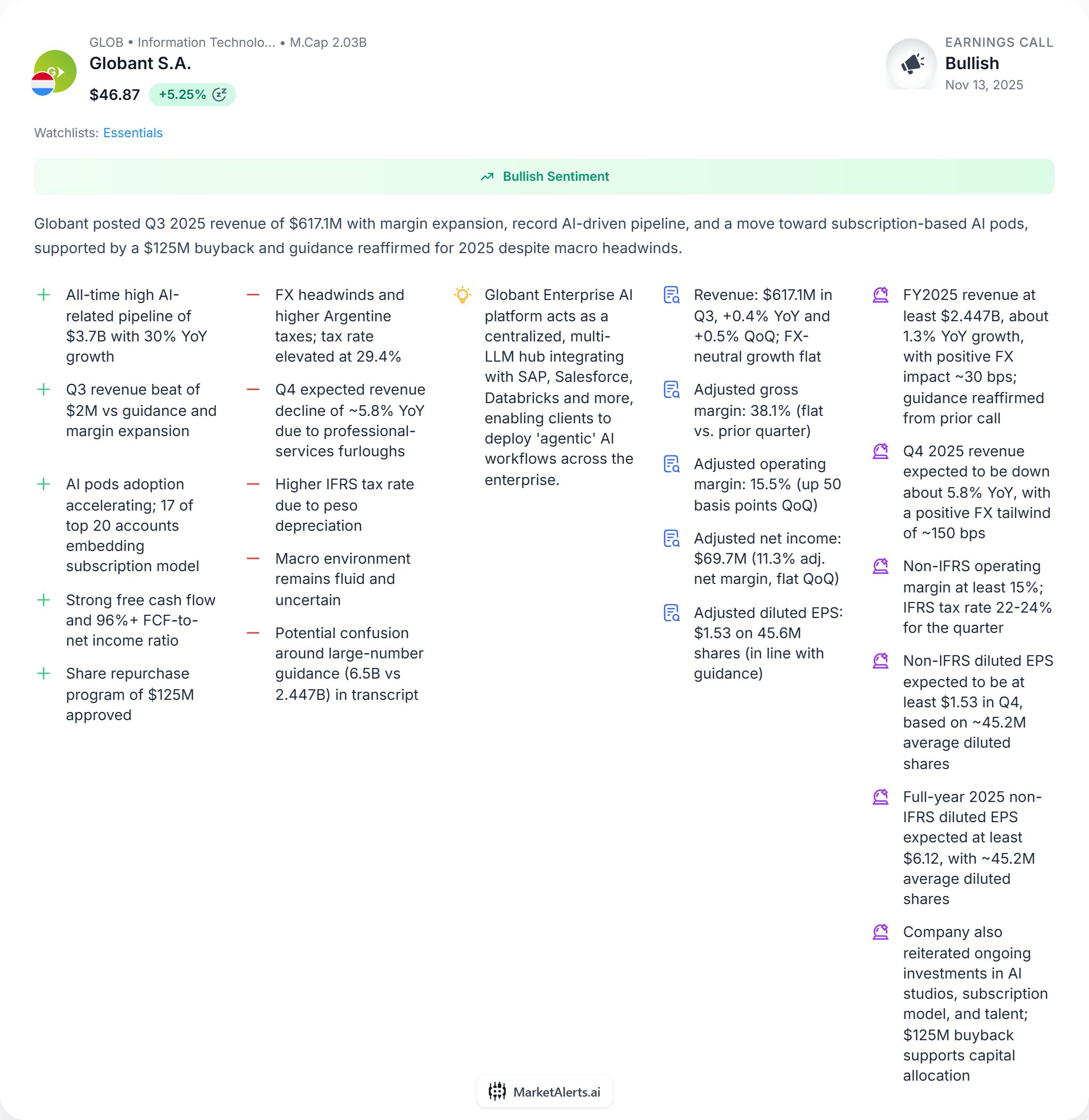
Unlike condensed summaries or media coverage, transcripts preserve the full exchange between executives and analysts. They show how leadership communicates when pressed on margins, demand visibility, competitive threats, or capital allocation. Subtle shifts in wording, confidence, or emphasis often reveal more than the headline financial metrics.
For investors focused on extracting durable insights, transcripts offer structural advantages.
They are searchable, so you can track recurring themes such as pricing pressure, customer churn, hiring plans, or expansion strategy across multiple quarters.
They are comparable, allowing you to analyze how messaging evolves, identifying when optimism becomes caution or when defensive language turns constructive.
They are permanent and create a documented record of management’s assumptions, targets, and commitments, making it possible to measure consistency and credibility over time.
When studied systematically, the progression of language across transcripts often exposes inflection points before they appear clearly in reported results. Over several quarters, changes in tone and narrative can signal strategic pivots, deteriorating conditions, or accelerating momentum well before consensus expectations adjust.

Why Earnings Call Transcripts Generate Powerful Stock Signals
Markets react to expectations, and prices move when those expectations shift. Earnings call transcripts often provide the earliest evidence of such changes, capturing nuances that precede headline numbers.
Tone Precedes Trend
Executives rarely announce major problems directly. Language shifts gradually, and those subtle changes can foreshadow market moves.
A company describing demand as “robust” may later call it “stable,” then “mixed,” and eventually “challenging.” This progression, visible across transcripts, can precede price declines by quarters.
The reverse is also true: companies shifting from cautious to confident language may be signaling improving fundamentals before analysts revise estimates. Systematic tone analysis can deliver early, actionable stock signals.

Guidance Drives Market Reaction
Earnings beats or misses matter less than guidance. A company may exceed expectations yet see its stock drop if forward guidance disappoints, while a modest miss combined with optimistic projections can spark rallies.
Transcripts reveal the nuance behind guidance: how confident management appears, whether forecasts are qualified by macro uncertainty, and whether assumptions are clearly articulated. Small wording differences often distinguish bullish setups from risk-off scenarios.

Analyst Pressure Highlights Institutional Concerns
The Q&A section exposes what large investors are watching. When multiple analysts press management on inventory, customer concentration, or regulatory risk, these topics reflect institutional priorities. How executives respond (defensively, evasively, or confidently) can serve as early warning signals or reinforce positive narratives.
Strategic Shifts Appear First in Language
Major changes rarely occur overnight and are often hinted at in conversation before they appear in financial statements. Companies may shift focus from growth to efficiency, from expansion to margin protection, or adjust investment priorities gradually. Transcripts capture these transitions in real time, offering forward-looking insight that investors can leverage before the broader market recognizes the pivot.
Studying earnings call transcripts systematically allows investors to detect these early signals, giving them a measurable edge in anticipating price movements and market sentiment.

Behavioral Finance and Earnings Call Transcripts
Earnings call transcripts reveal more than financial results. They expose the psychology driving management and, by extension, the market. Confidence, fear, and narrative framing influence how investors interpret numbers, and executives are keenly aware of this dynamic.
Leaders who speak with clarity and specificity tend to inspire trust. They quantify demand, explain cost drivers, and provide structured plans that signal conviction. In contrast, uncertain executives often rely on vague language, refer to macro trends, or make promises without measurable milestones. These patterns reveal where confidence diverges from reality, and such gaps often precede heightened volatility.
Investors who integrate behavioral insights with traditional financial analysis gain a distinct advantage. Transcripts offer a rare, detailed view of both the decisions and the mindset behind those decisions, providing a psychological lens that is difficult to capture elsewhere.

How to Read Earnings Call Transcripts for Actionable Stock Signals
Earnings call transcripts are a rich source of insights, but without a systematic approach, they can feel overwhelming. Lengthy, repetitive, and dense with financial jargon, transcripts often conceal the subtle shifts that can signal future stock movements. The key to extracting value lies in reading with intent and context.
The first step is comparing the current transcript to the previous quarter. Markets respond to change, not static information, so focus on what has shifted.
Start with the prepared remarks:
Determine whether management emphasizes growth or caution.
Note if they highlight new initiatives or defend existing performance.
Observe capital allocation commentary closely.
Pay attention to subtle language changes; for example, a shift from “aggressive expansion” to “disciplined investment” may signal a reassessment of priorities or moderated growth expectations.

Analyze the Q&A section carefully:
This often contains the richest insights, as analysts represent institutional capital.
Watch for repeated questions about the same risk factor.
Note requests management struggles to answer or metrics executives avoid quantifying.
Evasive, heavily qualified, or redirected answers, or frequent reliance on macro explanations, can indicate underlying pressure or uncertainty.
Evaluate forward guidance in detail:
Identify qualifiers such as “assuming stable conditions” or “pending visibility improvement.”
Conditional guidance often reflects management uncertainty and can affect investor expectations.
Focus on detecting gaps between management’s narrative and market expectations; these gaps are where actionable stock signals emerge.
Advanced Techniques for Extracting Trading Insights
Once comfortable with transcript reading, you can adopt deeper analytical methods. Track keyword frequency over multiple quarters. Rising mentions of terms like “demand softness” may precede revenue slowdowns. Cross-check numbers against narrative statements. If margins are declining but management insists profitability is improving, treat the commentary with caution.
Comparing commentary across competitors can also reveal opportunities. Divergent narratives (such as one company reporting strong demand while peers report weakness) may indicate a competitive advantage or selective framing.

Similarly, monitor analyst sentiment over time. Are their questions becoming more cautious? Are price target revisions aligning with management’s tone?
Used consistently, transcripts become more than quarterly records. They become early indicators of trends, revealing subtle shifts in market perception before they are reflected in price.
Accessing and Acting on Earnings Call Transcripts with MarketAlerts
Earnings call transcripts are widely available, but accessing them efficiently and extracting actionable insights is challenging. Most companies post transcripts or audio replays on their investor relations pages shortly after earnings releases, and public companies like Alphabet or JPMorgan Chase maintain archives of prior calls. Financial news platforms, brokerage research portals, and certain market data providers also aggregate transcripts, often with keyword search capabilities.
Even with easy access, the volume and pace of earnings season create a bottleneck. Each transcript can exceed 10,000 words, and dozens of companies report in just a few days. Manual reading, even selectively, cannot keep pace.

By the time traditional analysis is complete, institutional algorithms have often already acted on the same information. Investors relying solely on manual methods risk reacting after the market has priced in the narrative.
This is where MarketAlerts provides a clear advantage. AI-powered earnings call transcript summaries give investors a massive advantage. Instead of line-by-line reading, MarketAlerts instantly identifies subtle yet important signals, including: sudden shifts in tone relative to prior quarters, changes in guidance confidence, recurring risk themes during Q&A, and language indicating acceleration or slowdown.
In other words, MarketAlerts uses AI to convert qualitative commentary into structured, actionable insights, bridging the gap between raw narrative and real-time decision-making.
With MarketAlerts, access to information is paired with speed and precision. Users receive concise, structured highlights within minutes of transcript publication, including tone changes, guidance shifts, analyst pressure points, and potential bullish or bearish narrative inflections. These insights integrate with real-time smart trading alerts, enabling investors to respond immediately when actionable signals appear.
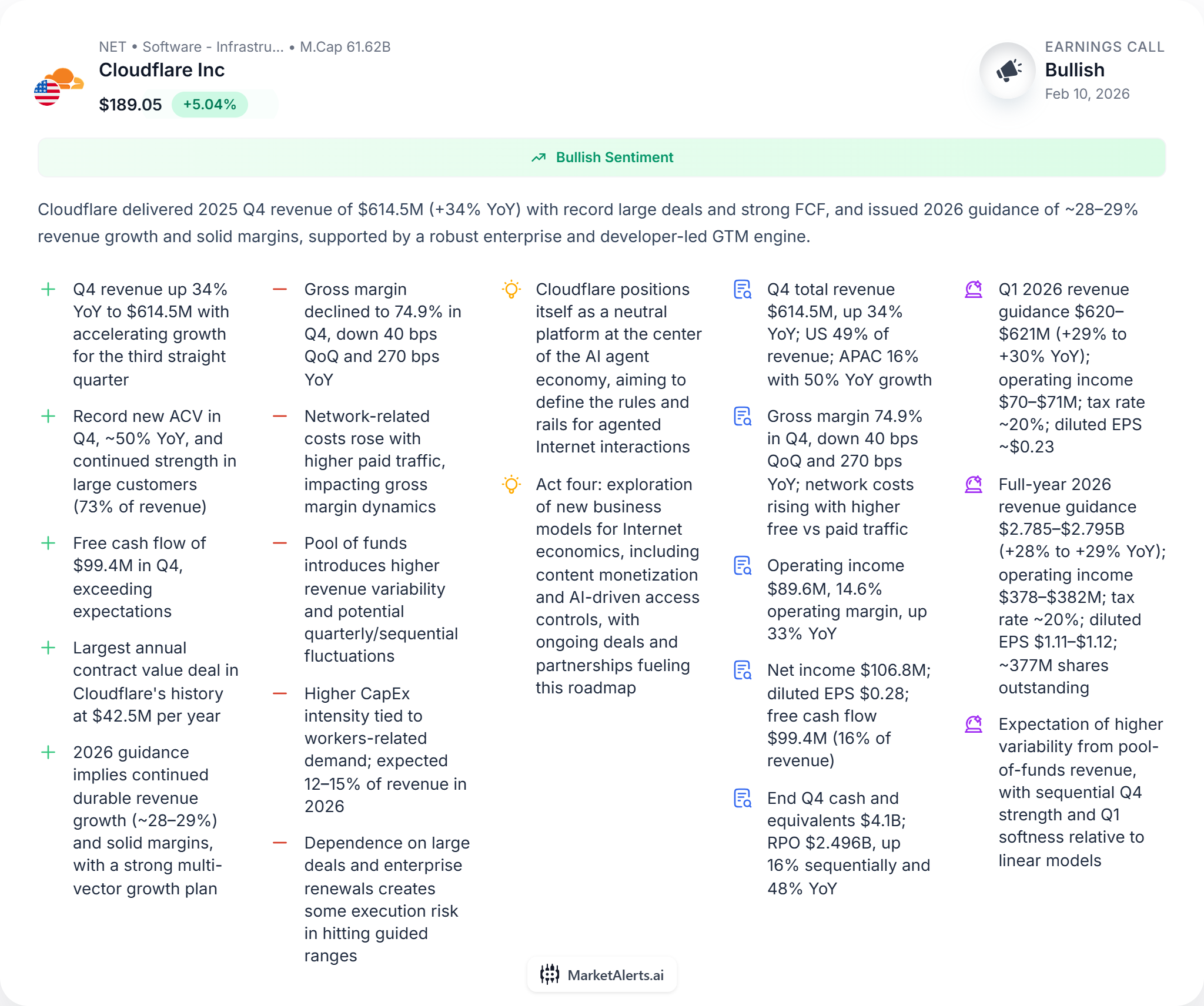
Rather than reacting to headlines after price moves, investors using MarketAlerts can position themselves based on the underlying narrative captured directly from management’s commentary. In an environment where speed, interpretation, and execution define advantage, an AI-powered tool like this turns earnings call transcripts from lengthy documents into an instant, actionable source of stock signals.
Why Earnings Call Transcripts Matter More Than Ever
Markets no longer wait for earnings reports to settle before moving. Subtle shifts in language, hesitation in answers, or changes in guidance often signal what the numbers will later confirm.
Mastering earnings call transcripts is about seeing these shifts early: understanding not just what management says, but what they mean.
MarketAlerts captures these nuances in real time, distilling thousands of words into the signals that matter. For investors who act on narrative before it becomes headline, transcripts are more than documents: they are a lens into the market’s next move.